The community centre
Board chair of the francophone community centre since September 2024. I arrived when the organization was looking for a second wind. The francophone seniors’ days are running again.
OSSTF / FEESO · District 32 · Unité 64
Candidate for the Provincial ExecutivePresident of Unit 64 · Co-Chair of District 32 · Provincial Councillor since 2009
Your reality. My priority.Listen. Understand. Act.
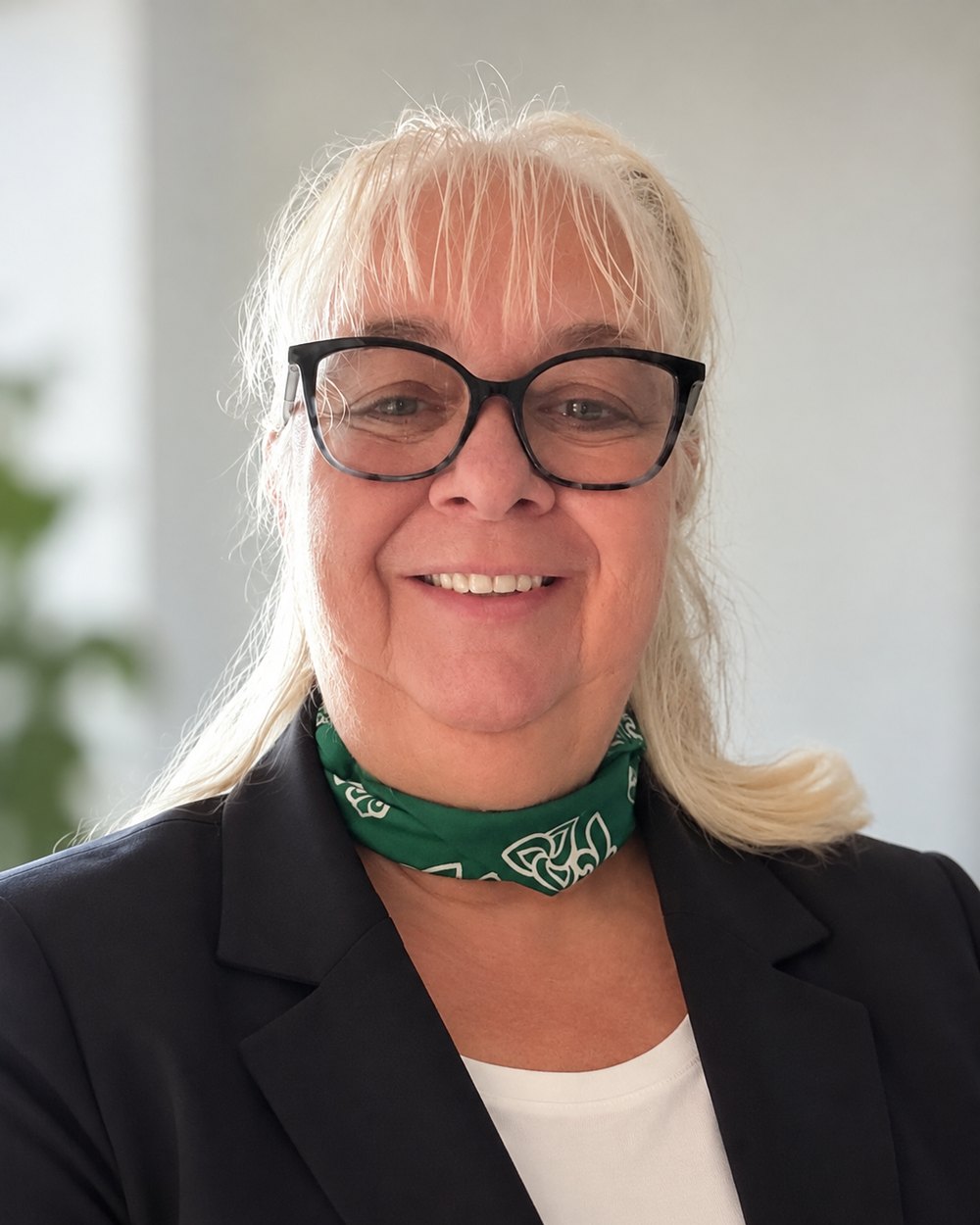
About
I was born in Sherbrooke and came to Ontario in 1999. In 2006 I joined Conseil scolaire catholique MonAvenir as a school secretary. That’s where I come from, and it explains everything after it.
A year later I became my worksite’s liaison, because someone had to connect colleagues to the unit. Treasurer in 2008, vice-president in 2010, president of Unit 64 in 2011. Co-chair of District 32 the same year. Provincial Councillor since 2009, without a break.
Along the way: a college diploma in finance, a university certificate in management, three years of advocacy training at Lambton Law School, and the Labour College of Canada program. And twenty years of answering the phone when an educational assistant doesn’t know what to do next. Both matter, and neither is enough on its own.
Unit 64 represents education support professionals at Csc MonAvenir: educational assistants, early childhood educators, secretaries, library technicians, IT technicians, cultural and pastoral animators, social workers, speech-language pathologists. More than sixty schools, from the Niagara peninsula to Peterborough.
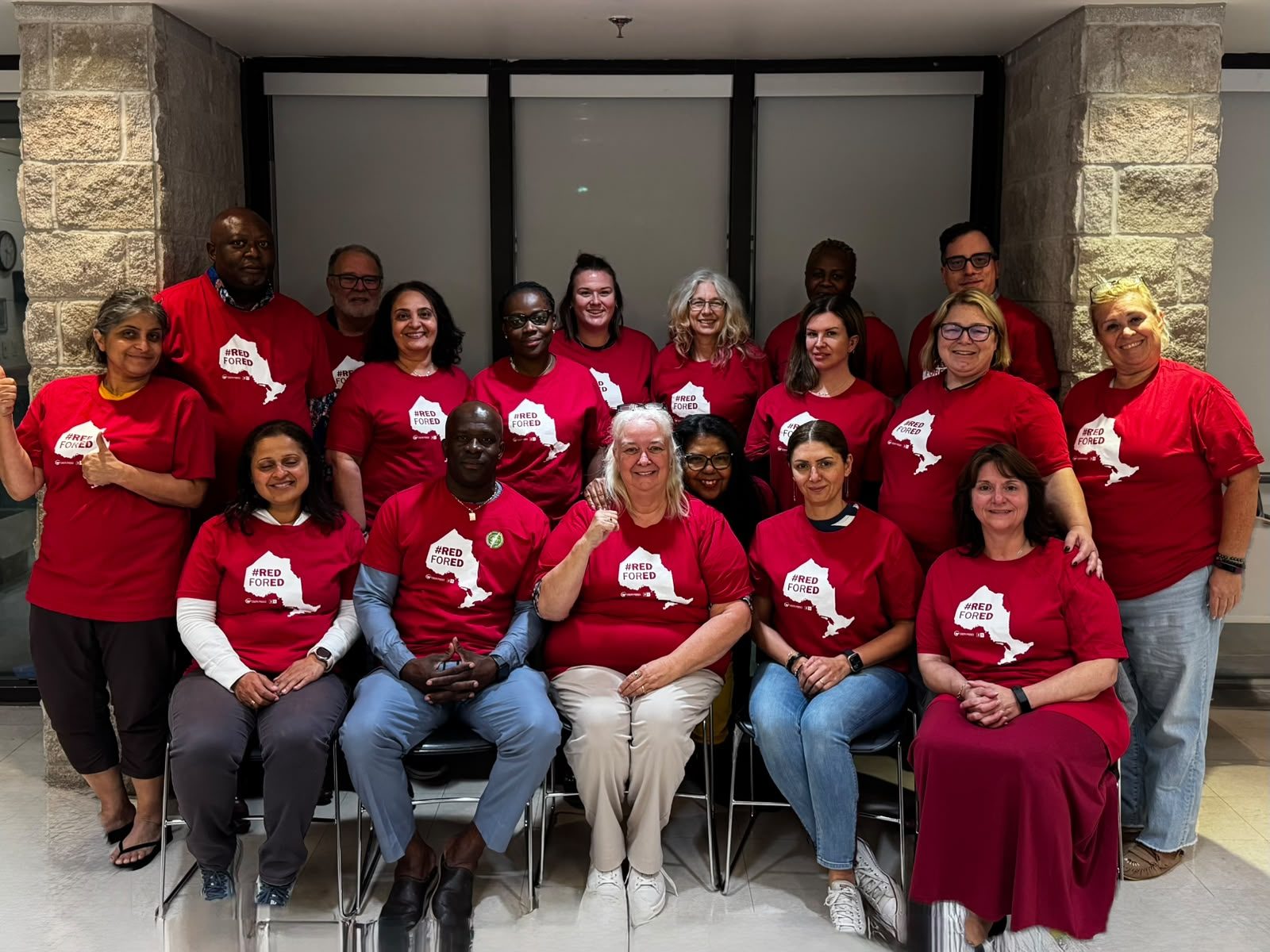
Ontario, since 1999
Board chair of the francophone community centre since September 2024. I arrived when the organization was looking for a second wind. The francophone seniors’ days are running again.
Treasurer and budget committee chair of the Waterloo Region Labour Council. An executive that seats ETFO, OECTA, OPSEU and two other OSSTF/FEESO districts.
Since 2011 I’ve built District 32’s presence in every labour council our territory touches. More than fifteen. Nobody defends members they never go and see.
What I stand for
This federation has more than one hundred and fifty bargaining units. The big ones get heard. The rest wait their turn, then find out what was decided. I come from the rest.
Our delegate formula gives one delegate per hundred full-time equivalents, with a floor of one per unit. Our own bylaws already say every table counts. Our bargaining strategy should say it too.
This isn’t only about French. A system built for the majority leaves members undefended: francophone, part-time, casual, or in a job class nobody at provincial can name.
I chaired the federation’s French Language Services Committee in 2023-2024, after serving as its vice-chair and Provincial Council liaison. I know what exists and what’s missing. Living in French in Ontario should never depend on your postal code.
The federation’s own numbers are known: most members report rising violence, and close to a third experienced physical force in the last school year. For educational assistants and child and youth workers, it is the norm, not the exception.
Since 2017 I have built and delivered my unit’s training on every applicable form: Bills 157 and 168, WSIB forms 6, 7 and 8, notices of intent to object. A member who doesn’t know which paper to file, and when, loses their recourse. That is fixed by training, and training has to come from provincial.
Dues went from 1.3% to 1.4% at the 2026 assembly, and districts voted against it. Provincial per-pupil funding is at a ten-year low. The federation’s next action plan has to be costed, not proclaimed.
I hold a college diploma in finance. I have kept the books of a unit, a district and a labour council. I have delivered the federation’s treasurer training since 2011. I can read a budget, and I can tell when an organization is telling itself a story.
The role
Most members have never had this role explained to them. Many don’t know there’s an election. Here, plainly, is what the Executive does and doesn’t do.
Seven elected people: a president, two vice-presidents, a treasurer, three executive officers. The provincial assembly decides once a year. The Executive decides the other fifty-one weeks.
It speaks to the government, sets the strategy, and recommends an agreement or doesn’t. Right now the contracts have expired and bargaining is stuck on what belongs to the central table and what stays local.
The dues of more than sixty thousand people. The rebates to districts. The action plan’s priorities. What the federation funds, and what it lets go.
To the media, to the ministry, to the other unions. When someone says “the federation thinks,” those seven people are who they mean.
What the job does not give you: the power to act alone. An Executive member has one vote in seven and has to persuade. That’s why being able to work with people who don’t think like you matters more than any promise.
The vote
Everything below comes from the official AMPA 2027 election manual. This page is not an official source: for an answer that binds the federation, write to the provincial office.
| Date | What happens |
|---|---|
| 19.01.2027 | Nominations close, 11:59 p.m. Campaign manager’s name and advertisement due the same night. |
| 05.02.2027 | Provincial Council. Candidates attend. No speeches allowed. |
| 12.03.2027 | Campaign rooms, 7 p.m. to 10 p.m. |
| 13.03.2027 | Close at 1:30 p.m. Speeches in the afternoon. Q&A sessions in the evening. Reception until 11 p.m. |
| 14.03.2027 | Balloting, at 9:05 a.m. |
| 30.06.2027 | Campaign financial statement due. |
Share
That isn’t their fault. Nobody explained the role, nobody told them who votes, and the race happens in a hotel room on a Sunday morning. If this page taught you something, it will teach someone else the same thing.
Contact
I’m going through the districts, one conversation at a time. One question to start: what is the federation not doing for your unit?
There is no form on this page and nothing here collects any information about you. Emails come straight to me and I read them myself.
Land acknowledgement
The territory served by District 32 runs from the Niagara peninsula to Peterborough. It covers the traditional lands of many peoples, including the Anishinaabe, the Haudenosaunee, the Attawandaron and the Mississaugas of the Credit First Nation, and is subject to several treaties.
These settings stay on your device.
This site is set in Atkinson Hyperlegible, a typeface designed by the Braille Institute for readers with low vision.